
High-end static renders sell the visual promise of an architectural design, but they rarely survive the practical questions of a client meeting.
Photorealistic Architectural Scene Rendered in ArchViz Tools (D5 Render)
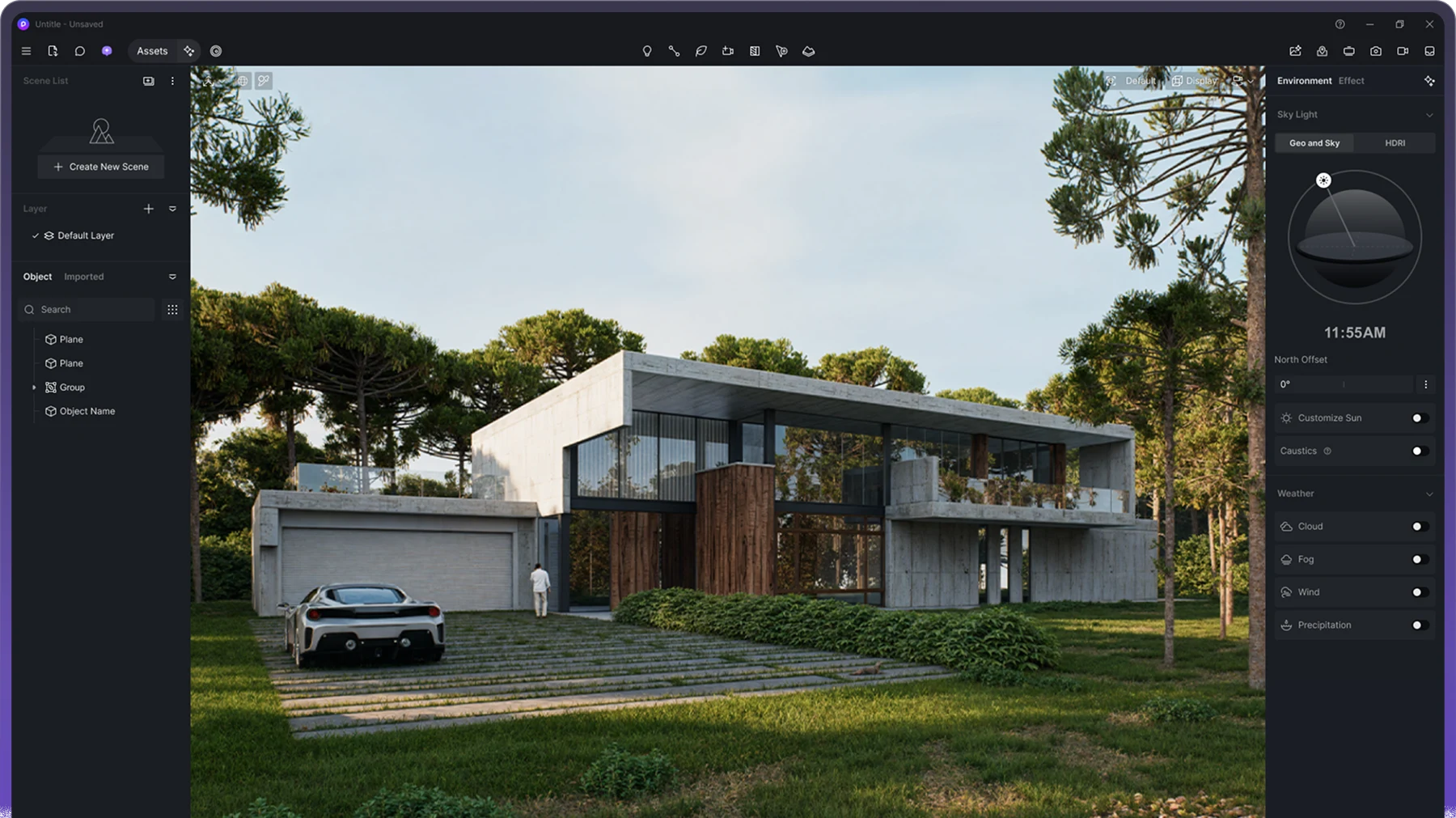
A static render captures a single moment, but client decisions require dynamic exploration.
When a client reviews a stunning 2D visualization, their immediate response often sounds like this:
“How does this material look in afternoon sunlight?”,
“What do we see when walking from the foyer into the main living area?”, or
“Can we test a lighter wood finish on these panels?”
Answering these spatial questions with traditional methods requires entering a costly iteration loop—setting up new camera angles, re-rendering frames, and scheduling follow-up meetings. By the time the new static images are delivered, design momentum is lost.
The Communication Gap in Architectural Visualization
A static image represents a decided destination, whereas client feedback is an active conversation. The fundamental bottleneck in modern ArchViz client communication isn’t image quality—it’s spatial context.
- Lighting & Atmosphere: Static renders isolate one specific time of day. Clients need to understand how ambient light changes across seasons and hours.
- Material Behavior: PBR materials respond dynamically to movement and perspective. A single camera angle fails to capture texture depth and reflection.
- Spatial Continuity: 2D stills slice up a building. Live navigation demonstrates proportion, sightlines, and human scale.
Live Sunlight & Material Adjustment in Viewport Streamed to Client Tablet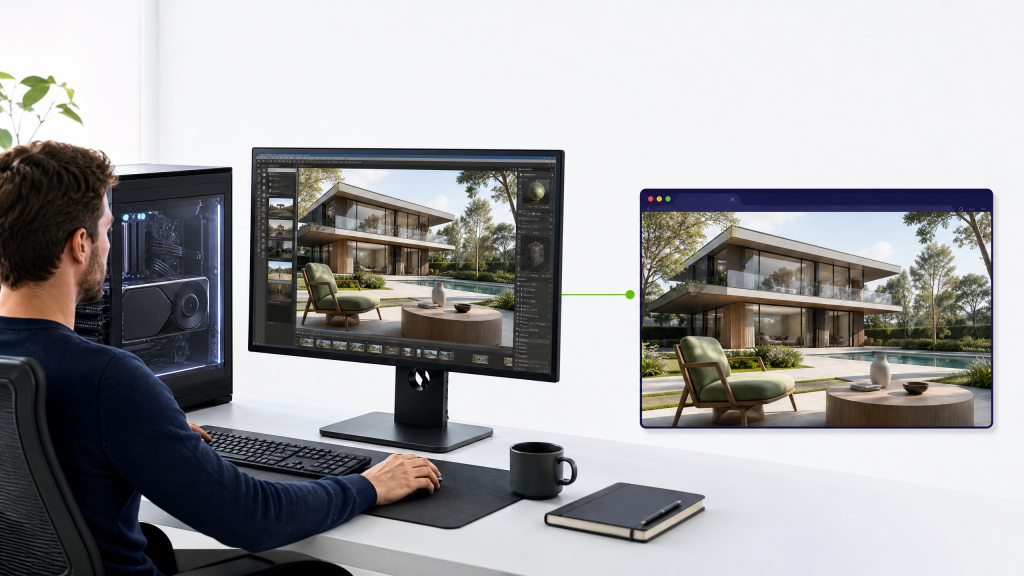
Bridging the Gap with Live Host-Led Reviews
Rather than rendering dozens of static alternatives, forward-thinking studios are shifting toward Live 3D Reviews.
Using ImmerShare Lite, architects and visualization artists can open their active scenes in D5 Render, Lumion, VRED, or Unreal Engine, and instantly stream the live viewport directly to a client’s browser.
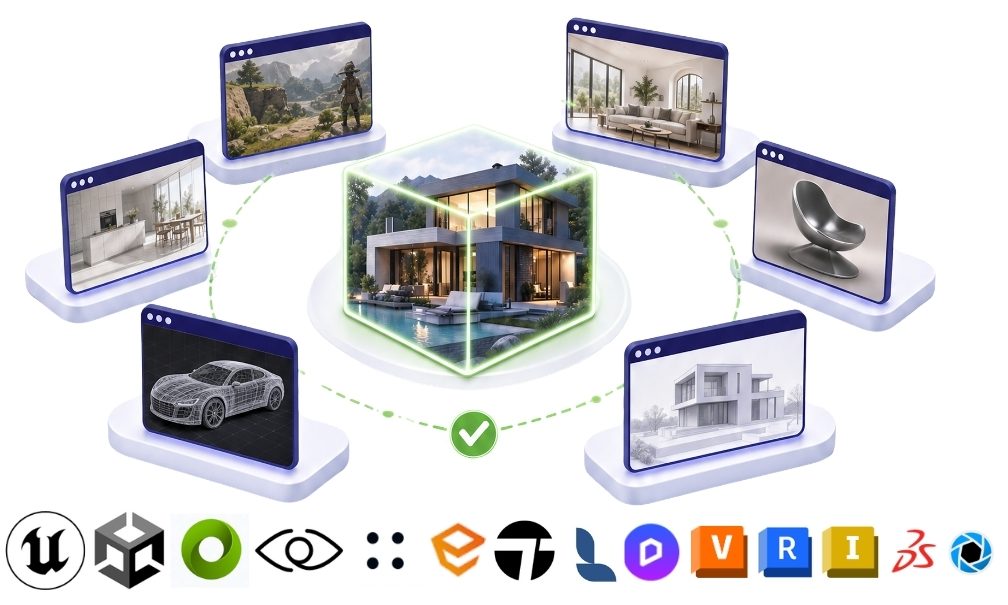
- Guide the Narrative: Through host-controlled streaming, the architect retains control over navigation, directing client attention to key design features while seamlessly answering questions in real time.
- Instant Material & Lighting Adjustments: Toggle sun positions, swap materials, or adjust camera views live during the video call without breaking the client’s creative immersion.
- Zero Client Friction: Clients view smooth, high-fidelity 3D streams on their iPads, laptops, or standard desktop web browsers without installing CAD/ArchViz software or managing heavy scene files.
Renders for Approval, Live Reviews for Decisions
Static renders remain vital for formal portfolio handovers, marketing brochures, and final sign-offs. However, during the interactive decision-making phase, forcing every spatial inquiry through a static export cycle creates unnecessary friction. Bring your architectural clients into the live space and shorten your approval cycles from weeks to minutes.
Elevate Your ArchViz Workflow.
Get Started with ImmerShare.
https://www.immershare.com/get-started/